
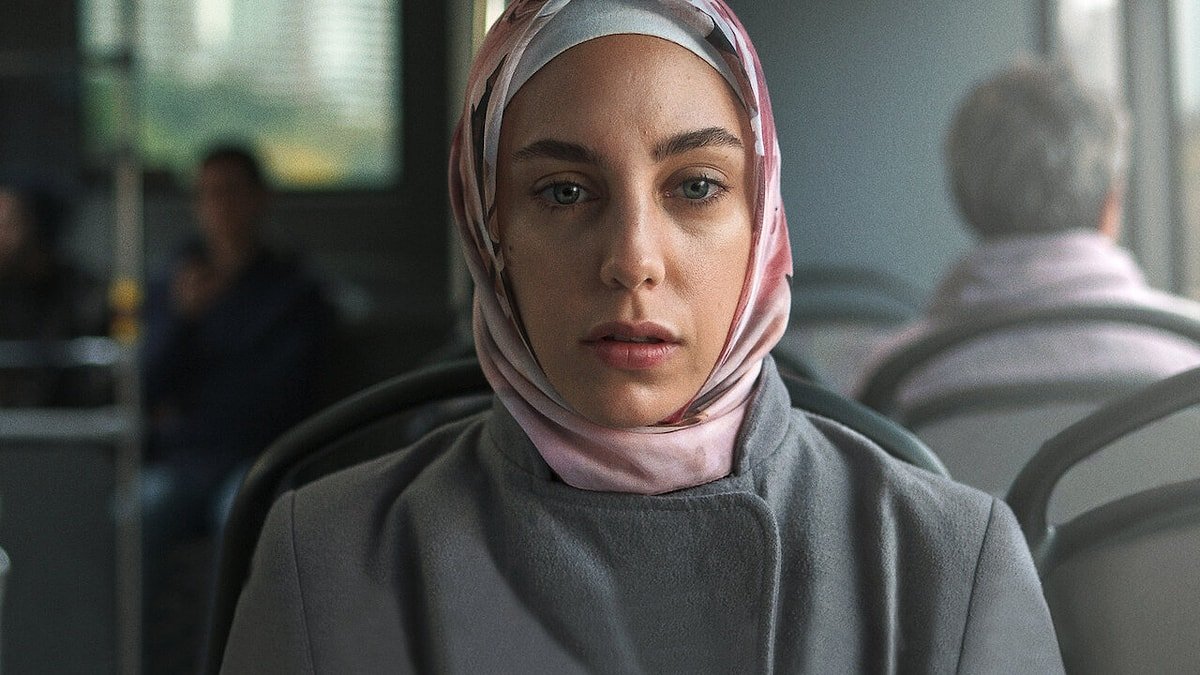
An Interview on the Series “Ethos” (Bir Başkadır)
https://artigercek.com/makale/mutluluk-insanin-uretme-kapasitesi-ile-ilgilidir-145008
‘Tell me something that will get me out of these troubles.’ This is the expectation of people who take the easy way out and don’t want to face things… And this expectation is met in Bir Başkadır.

Aytül Hasaltun Bozkurt
aytulhasaltun@gmail.com
‘Happiness is related to a person’s capacity to create’ | Aytül Hasaltun Bozkurt | Artı Gerçek
Published: November 29, 2020, 3:05 a.m.
Update: January 3, 2025, 4:04 AM
Our hunger and need for a happy ending, our desire to capture the flavor of those old Turkish films we all loved and watched with such enthusiasm, is understandable, of course. After all, even though we are individuals, our lives are not independent of our country’s economic and political situation. These days, with our lives turned upside down and our days shortened, we too want to be happy in this ‘false world’. It is certainly good that a very successful team has brought our wounds to light through finely intertwined lives, encouraging us to think deeply and express ourselves, despite everything. But; while a series races toward a happy ending, could it cause other mistakes with its reductionist approach to problem-solving, its hasty attempts to tie everything up neatly, and its careless attitude toward the Kurdish issue, our biggest wound, as Gülsüme puts it? By making the rapist or the violent one, the rich one, the cruel one cry and be forgiven—while many women shed gallons of tears in this series, as in many others—could it have given hope to another villain? I certainly hope not, and perhaps that is why so much has been written and drawn about it. Clinging to hope also means not embracing empty hope. Because this is not reality, because life does not only have happy endings. Problems will not be solved by kissing and making up like children. With the hope that we will all grow up together soon…
Keeping in mind that this is a series, we spoke with Clinical Psychologist Gülsüme Oğuz Uçar, of course, but we are a society that learns, thinks, cries, and laughs through series. We took this reality to heart and spoke with that responsibility in mind. Happy reading…
Why did this series capture our attention so much, why was it talked about so much?
I think the strong artistic aspect of the series captivated us. A good script and excellent acting caught our attention first. However, the cinematographer’s success was very striking for us. Photographs have the ability to awaken the viewer’s subconscious. This is why there is a field called “Phototherapy.” I am also a phototherapist. Images like the child playing with his toy on the carpet affected us deeply. They resonated within us. We felt the need to talk about this series of photographs.
Another aspect is that it’s local, in my opinion. We could perhaps relate this to nationalism through pride. I interpret it like this: A world full of local and poorly made productions can instill in us a feeling of worthlessness, like “we can’t make anything good.” A good production makes us feel like, “We can do good things too.” But what I want to emphasize is the fact that it is ‘ours’. We know these characters, they speak our language, and the story being told resembles us; we feel like we belong to it. When something is familiar, you feel good, and you look more closely at the place where you feel good.
I think one reason why it works so well is that it actually lets people pour their hearts out. It also shows what it’s like when people can’t pour their hearts out. That’s our state of mind. As a society, we can’t make sense of our own feelings. For example, Meryem sitting silently for 15 minutes in front of her therapist, unable to find anything to say and asking about the bus, may have made some of us smile, maybe even laugh. But actually, we’re all a bit like that, aren’t we? The series gave voice to everyone. Even people who couldn’t express themselves found their voice in Ruhiye’s lines, in her husband’s lines.
The series tells us this: ‘You got yourself into this situation by bottling things up.’ Talking and confronting issues is good for us. It made us feel much better, and I think it had a therapeutic effect on the viewers too.
The series opens with a statement about suppression. When I think about each character individually, who is suppressing what in the series?
In psychology, the concept of repression is used for emotions or life experiences that are difficult for a person to accept. Repression is one of our primary and most common defense mechanisms. I think it was Ruhiye who said, “We got to this point by burying it deep inside ourselves”… Ruhiye has had a very serious traumatic experience; she is a woman who has been raped. Ruhiye tried to repress the rape she experienced without talking about it and build a new life. But it’s clear that she always carried the need for justice. There are many situations where we get angry, upset, scared, or feel wronged, but we can’t express these feelings, we can’t face them, we can’t seek justice, we can’t bring them to a conclusion, and as a result, we can’t continue our lives in a healthy way. In the series, after learning of her rapist’s death, Ruhiye’s suppressed emotions surface and manifest as major depression. It’s clear that Ruhiye had some hope for reckoning. However, the man died of natural causes without facing any punishment. This has killed Ruhiye’s hopes.
In the series, every character suppresses many emotions. Meryem is a woman who wants to be loved and to love so much that she faints when she attends other people’s weddings and engagements. Finally, when she receives a marriage proposal with a ring, she faints (experiences a conversion). Peri’s suppression of her need to love and be loved emerges towards the end of the series as she cries loudly. Ruhiye’s suppression of her young son’s every word, his complete silence… As we see many examples of in the series, ‘suppression’ causes many symptoms, big and small.
What happens when we can’t face it?
It’s possible to explain confrontation in the same way at both individual and societal levels; an individual may have wronged someone or suffered a serious injustice; societies may likewise wrong other societies or suffer injustices from other societies. Individuals and societies may neither apologize when they have wronged someone nor seek redress in the face of injustice. The consequences of failing to seek redress, failing to confront, and failing to be held accountable are similar at both individual and societal levels. When we cannot confront our mistakes, we avoid talking about them or we create arguments to prove we are right, trying to convince ourselves and others of these fabrications. This will always create an artificiality and a sense of emptiness. And that sense of emptiness will create cracks and fissures in memories at both individual and societal levels. Simply put, in the series, the relationship between Peri and Meryem is portrayed as a conflict between conservatism and secularism. However, this is actually an example of conflict between economic classes. Peri has constructed such a beautiful buttress to support her prejudiced attitude towards Meryem, based on the issue of headscarves, that she neither recognizes nor reveals the barbarity within herself. The way she described Meryem—using phrases like “fresh and tender”—was striking for me… You don’t describe a person, a young woman, as “fresh and tender.” What is fresh and tender? A lettuce, a vegetable, something edible. Psychologically, I interpret this as a serious anger, so intense that one wants to devour her raw, expressed in the words “fresh and tender.” But because this anger is expressed with words that are pleasant to everyone and with a loving tone, it prevents us from understanding the malevolent feelings in Peri’s character. Or, similarly, you wouldn’t describe someone you consider your equal as “lively, very intelligent, sharp as a tack.” An adult might say that about a young child. Peri and Meryem are not economically equal. Sociologically, economic classes are defined as lower, middle, and upper classes. Peri belongs to the upper economic class and approaches Maryam, who is in the lower class, with a condescending attitude. Those in the lower class might be considered endearing by those in the upper class when they are insignificant. In everyday life, I’ve heard women say, “I have a good woman,” referring to women who work as house cleaners. They describe the woman who cleans their house as if she were their own property. As economic classes, we can’t confront our own situation. This is a painful reality.
The position Meryem finds herself in at the house where she works as a cleaner is also very painful… The place where she puts her clothes after changing is a drawer in the bathroom! The inequality between classes is such a chasm that it makes her feel so worthless that she finds herself in a bathroom. Or, the depth of this chasm can evoke anger. Like the phrase we hear most often in daily life, “They have money, but no peace!” So, if I can’t deny that someone has money, then I can deny that they are happy! The series supports this view by depicting family dynamics. Families with lower economic status, Meryem’s family and the Imam’s family, are happier and relatively more close-knit. On the other hand, in families with better financial situations, such as Peri’s and Sinan’s families, we see extremely cold relationships. This is one of the protective beliefs of class difference. Money but no peace, money but no happiness. We don’t have money, but we are happy… Let’s stay stuck in our own class and not rebel against it. Otherwise, we too will be unhappy! Happiness is related to a person’s capacity to produce. Poverty can weaken or, conversely, spur on that capacity to produce. Material wealth and easy access to things can either hinder or enhance creativity. Happiness and productivity are influenced by physical conditions.
Religion becomes the greatest resource resorted to in order to suppress the feelings of worthlessness or anger created by the difference between economic classes. As we see in the series, the religious leader strives to prevent conflict by acting as a protector of the economic class divide. Using the example of the imported tulip versus the flower in the garden, he points to life in a place where you don’t belong as fake and lifeless. The imported (foreign) flower looks beautiful, but it’s not real, it’s not even alive, it’s dead. The living flower is real, it’s in your garden; it smells beautiful like you and is as fragile as you. Thus, he dismisses the idea by advising everyone to live in their own garden. But the truth lies on the table in the mosque garden; a donation box sits next to the fake tulip.
The imam in the series is so good at maintaining and protecting class distinctions that he tells Meryem, “Go to therapy, try it, but tell me about it. If I deem it appropriate, then you can continue.” Because going to therapy is also a class issue. In today’s conditions, unfortunately, getting therapy services in a state hospital is not easy at all. There are very few therapists, appointments are very full, and the state unfortunately only allows you to see a therapist once every two weeks. Whereas therapy should take place at least once a week.
I remember from Çapa, even if you get therapy, you might not end up with the same therapist. They’re constantly changing.
Continuity is crucial in the therapy process. Going to the same therapist is extremely important; otherwise, it’s not therapy.
Returning to the subject, the Imam harbors a great deal of anger towards Ruhiye. He sees Ruhiye’s depression as stemming from the following events: her husband’s business fails, whereupon he returns to his hometown, sells his olive groves, and tries to pay off his debts. Following this, Ruhiye falls into depression. The Imam understands that Ruhiye loses her zest for life after losing money and possessions. Therefore, he doesn’t consider it permissible for Ruhiye to receive therapy. His statement about Maryam’s sister-in-law, “She’s not a doctor; her job is something else,” reflects the Imam’s view. Despite Ruhiye’s numerous suicide attempts, the Imam shows no pity or compassion, and doesn’t say, “Take this woman to a doctor.” Instead, he says, “If you’re giving up on life because of financial reasons, then die.” We see a religious leader who protects economic status, even cruelly if necessary.
Another thing that caught my attention was the frequent treatment of motherhood and fatherhood issues. There was the very basic issue of Eve, and then there was the issue of Mary… and alongside that, the issue of fathers who weren’t really present.
As Mary herself says in the first episode, her name comes from the mother of the Prophet Jesus. The Virgin Mary character is like a compassionate, calm, and non-judgmental mother to Sinan. She’s also the woman he longs for when he feels his worst. One morning, when he feels unloved, Mary appears in his dream with a feminine demeanor, sits opposite him, and fixes her gaze on him.
Mary’s aunt, having been raped in the shade of date palms, was in a way expelled from paradise. She became depressed, wanted to die, and wanted to leave this world. On the other hand, there is no paradise waiting for her. Those who commit suicide cannot enter paradise, according to Islam and other faiths as well.
Sinan tells his mother, “Throw up, defecate, and relieve yourself, but don’t frown.” He actually means she should vent her feelings by talking. A frowning mother carries undigested vomit and feces inside her. Even though his mother says she wants to see him get married, start a family, and have grandchildren, this isn’t very satisfying for Sinan. Because his mother often bites him with her words. “It turns out I gave birth to a dog!” he says.
In the scene where Sinan is with his mother, there is a deceased father. And there’s Ercan, a neighbor’s son who calls Sinan’s mother “mother.” As if that weren’t enough, Ercan, like his late father, loves minced meat stew. His mother pointing to Ercan as his father’s son upsets Sinan. Ercan has taken Sinan’s place in the family romance, which previously consisted of mother, father, and child. Sinan then utters words that break all boundaries: “I’ll fuck his deceased father, and I’ll fuck Ercan too!” In psychoanalytic theory, the father is the one who sets and establishes the incest taboo and other laws. We don’t know what kind of character the deceased father had. However, an unsatisfied, narcissistic, and depressed mother pushes the child’s boundaries and causes him to attack the rules set by the father.
Sinan is insincere and artificial towards other women, those he could potentially mother. He avoids commitment, calculating whether or not to spend even a single night with women. He doesn’t give babies to the women he sleeps with, nor does he make them mothers. However, this prevents him from becoming a father himself. When he feels bad and empty, the only person he thinks of and waits for is Meryem.
The quarrel between Gülbin and her older sister is calmed by the klam (a type of folk song) sung by their father. Their mother’s comforting words are not enough to soothe them. The klam, sung in their native language, brings them closer together. Isn’t every melody, in a way, a lullaby for the mother?
Peri’s mother also seems to be feigning concern. Peri is sent to various places to receive the best education and enjoy vacations. But she is completely unaware of her daughter’s true feelings.
As a Kurd and a psychotherapist, what has most influenced you regarding Kurdish identity?
Everyone in the series is an actor, and they’ve all given very good performances. But Gülbin’s parents aren’t actors; they’re ordinary people. This struck me as very careless. I’ve come across this before in other works. For some reason, they’re portrayed as authentic figures: a Kurdish mother and father in white headscarves, who can’t speak properly and perhaps don’t even know Turkish. It’s like creating a traditional Turkish seating area in our house… It’s like ordering cushions with rug patterns from Unkapanı instead of laying down a handmade rug from a specific region… How can a director who’s done such a good job make such a mistake? When I saw a similar situation in another project, I had the opportunity to ask the director, and he told me, “They can do it most realistically.” I don’t think that’s an explanation. He didn’t find an actress to play Meryem and tell her to “act.” And how beautifully Öykü Karayel played the role! She really touched our hearts. We have a real Meryem in our minds, not Öykü Karayel. Weren’t there any good actors who could play Gülbin’s parents? Whether these actors are Kurdish or Turkish is not the issue. Ultimately, they only have a few lines anyway; if they’re asked to speak in Kurdish, they’ll sit down and practice… When English or Spanish is required, we see that the actors can pronounce and deliver those lines beautifully. It’s about acting. I see the director’s approach there as careless.
Moreover, Tülin Özen also speaks Kurdish in some scenes. If Tülin can speak it, another actress could certainly do so as well.
Of course, why shouldn’t we talk about it? The director may have many other explanations; I’m just saying what I saw and what it evoked in me. It’s as if the director said, “Let it be very realistic, let it reflect reality exactly, so I’ll use the real parents.” We can also see that people who claim to be overly concerned about an issue, such as the issues faced by Kurds, are actually secretly neglecting them. Hearing this would hurt them deeply, of course. When Peri realized that she could only see women wearing headscarves as maids, she screamed and cried. If we ask the director, “Where would you like to see a Kurd? Couldn’t there be a Kurdish actor, or an actor who could portray a Kurd?” they would defend themselves. They might accuse us of being prejudiced. But I still think it’s carelessness.
On the other hand, as a psychotherapist, it contained many things that both bothered me and pleased me. “Bir Başkadır” describes well what a therapy session is like. With a sense of social responsibility, we really need to explain the field of therapy. Mental distress causes many people to live their lives in great pain or even resort to suicide. There are many people in society who need therapy, but they don’t consider going to therapy because they don’t know what therapy is like, how a therapist will approach them, or how they will help. Adding insult to injury, there are many prejudices circulating in society, such as “only crazy people go to therapy.” Because of these prejudices, many people are reluctant to seek therapy. Yet Meryem, one of us, goes to therapy. No one labels or judges Meryem. For this reason, I believe the series also fulfills a social responsibility.
The sessions between Peri and Meryem are quite well-structured. However, despite Peri’s statement that “what is discussed in the session room stays here,” Meryem shares her story with a friend at a bar. The confidentiality of what is discussed, meaning that it does not leave the session room, is one of the fundamental principles of a therapeutic relationship. Peri is committing a major ethical violation. Many people watching this series and undergoing therapy have probably felt violated. Clients want to hear the phrase “what is said stays between us” repeated over and over again. Because this is a very important need. In a country where people hold funeral ceremonies and even build graves for deceased TV characters, many people will perceive this as normal. Therapists will think, “Clients talk about their therapists.” This can be a barrier to people seeking therapy. Or, many therapists are currently working hard to convince those in therapy that this is not actually the case.
The relationship between Gülbin and Peri snaps in one session. The fear that a relationship will suddenly end is something many clients suffer from. While attachment, distancing, and separation are the most common topics explored in therapy, in the series we see a relationship that is abruptly severed.
Another point is the constantly changing boundaries between Peri and Gülbin. Although Gülbin and Peri are friends, they entered into a supervision relationship, which is probably due to a lack of counseling. Gülbin and Peri are professionally designed as peers. There is a form of supervision called peer supervision. Two or more therapists who are considered peers can come together and supervise each other. In this case, being friends is not an ethical problem. In this situation, everyone talks about their client and waits for feedback.
However, Peri is sitting opposite Gülbin just like a client. She cries, swears, gets angry, and closes the topic when she doesn’t want to. These sessions have nothing to do with supervision, either directly or indirectly. Supervision is a place where feelings are verbalized. Supervision is a place where we look at what we feel, put it into words, but where the mind is discussed. When the person receiving supervision says, “Let’s close this topic,” it does not close, it cannot be closed. As a therapist, I take responsibility for a client, and my supervisor takes responsibility for both me and the client.
There is also a lot of misinformation about mental health. Underestimating depression is dangerous on a societal level. Depression is a serious disorder with both psychological and physiological symptoms. While confronting the issue is a valuable step in the healing process, it is not sufficient on its own to overcome depression. Especially in cases as severe as Ruhiye’s, where she neglects her children’s care.
There is also the concept of countertransference, which is constantly being discussed. In Turkish, it is called karşı aktarım. What Peri refers to as countertransference is actually her own prejudices. These feelings are not unique to Meryem. Peri’s character has known this from the beginning. Peri is angry towards conservative women or groups, and the reason for this is her own past and inner life.
Therapy is based on transference and countertransference. When a client comes to us and starts talking about their problems, and we start asking questions and making comments, something always happens: the therapist first evokes a feeling in the client. The client positions the therapist as their mother, father, sister, boss, or something similar. The client is often not very aware of this. For example, the client may hesitate to say something. If they were to say something, it would be as if the therapist would get angry or criticize them. The situation where the client fears and avoids being criticized by the therapist is called transference. The therapist, who will not judge the client, may behave in an overly protective manner so as not to hurt the client, who is shy and timid towards them. The situation where the therapist unconsciously takes an overly protective approach towards the client is called countertransference. At this point, the therapist reviews their overly protective attitude with the help of themselves or their supervisor. In this way, the things that discourage the client can be understood and overcome. Therefore, feelings of transference and countertransference are extremely important in therapy. These feelings are not ‘damned’ feelings, as Peri expresses. This concept has been misunderstood and misrepresented in the series.
If you are working in this field, you must put in the effort. If supervision is to be provided, writers must know what supervision is; if it involves countertransference, they must at least understand what that concept means. Of course, writers cannot be expected to sit down and read an entire body of literature. However, they should seek professional guidance in the relevant field. Failure to do so can lead to hurtful, damaging consequences at the societal level.
There was another teacher in the series who caught our attention, one who mentioned Carl Gustav Jung. Meryem’s classmate, a suitable future husband candidate, who was just her height, and in the end, after a very sincere marriage proposal, Meryem fainted once more from joy… What was conveyed to us through that teacher?
On the street, in a coffee shop, someone could sit down and talk about Freud, or mention Winnicott. What they say might be incomplete or incorrect. Don’t many psychologists graduate without fully grasping a lot of concepts? There, we also saw an interesting example of how clergymen twist and turn all kinds of information to use it appropriately. The issue of the social unconscious is being discussed. Certain arguments, inherited from our ancestors and our history, reside somewhere within us. And we live our lives shaped by their influence. The issue of the social unconscious is being linked to destiny or fatalism. Then we see the muezzin Hilmi experience an enlightenment and arrive at the point where he says, “If we are aware of what lies outside our social unconscious, we can free ourselves from being its prisoners. Thus, we can even determine our own destiny.” I have read comments that greatly belittle this coffeehouse philosopher. There is a prejudice that religious figures do not read. Yet we see that the imam has read quite good books. These are our prejudices. I have met people who produce philosophical thought in coffeehouses, and I have met neighborhood imams who try to make sense of theories through religion. So, can only university graduates talk about these things? Who can guarantee that every university graduate has read at least 10 books of their own interest? Or where do we get the idea that Kurdish parents are ignorant? How do we define ignorance? With this perspective, we get so angry at Peri’s
Gülsüme, can we get out of major depression like this? As a woman, this was one of the scenes that bothered me the most. Shall we talk a little more about this?
I think it’s dangerous on a societal level that Ruhiye’s depression is taken so lightly in the series. It would have been more realistic if Ruhiye had said something like, “I want to be well now, I feel sorry for my children, my husband, myself. I have to get out of this, I don’t deserve this.” Depression is a serious disorder with both psychological and physiological symptoms. While confronting it is a valuable step in the healing process, it is not enough on its own to overcome depression. Especially for a severe case like Ruhiye’s, where she neglects her children’s care… We often hear people say, “Tell me something that will get rid of these troubles.” This is the expectation of people who want to take the easy way out and avoid confrontation… And this expectation is met in Bir Başkadır.
The confrontation between the rapist and Ruhiye was also interesting. The rapist made excuses for what he did, he says. But he still doesn’t fully understand the evil he did to Ruhiye. Despite this, from what I’ve read from both Ruhiye and the comments, there are other things that have brought comfort to many viewers. That is, the rapist being beaten in the village square until he was blinded and crippled… This created the impression that the justice system had worked quickly and the guilty party had been punished. However, there is something else very important that we see after the confrontation scene. There are two women who are victims of rape. The other woman is Saime, and she was married off to the rapist.
What is being described is not confrontation. It is actually finding punishment there. And he found his punishment, and I can get out of depression. Depression has many psychological and physiological underpinnings. We release different hormones when we feel happy, and different hormones when we feel sad. The physiology of someone who feels extremely exhausted, tired, and unhappy over the long term, someone who can’t derive any pleasure from life, is very different. Just because someone has faced their issues or their punishment has ended, those feelings don’t change immediately, and our physiological makeup can’t just snap back to its old state. Therapy is a long-term process. Depression that is this severe and has lasted at least two years doesn’t just disappear overnight. It is certainly possible to overcome depression, but not in a day or two.
Or for a child’s tongue to suddenly loosen up, it’s not that easy. That depressed mother now has a place inside the child. Yes, the mother felt good once, but the child feels shock and horror above all else. They don’t immediately hug her, saying, “My dear mother!” The child has been scared, cowed, withdrawn for years. When a cold, icy, suicidal, strangely behaving mother who never showed any interest in him suddenly becomes joyful, what happens if he says, “My dear mother”? What goes on inside the child? He is seized with horror, he stops, he runs away. They wait to see where their mother’s bad behavior has gone, waiting to see if her current state is reliable or not. After a long, conflict-ridden process, if the child feels safe, they may start to talk. If such a situation is being discussed, it may be incomplete, but it should not be wrong.
We saw all the men crying in the series. The series also explored many aspects of masculinity and femininity, and in the end, we saw most of them crying. What would you like to say about the men in the series? For example, when we see a violent character who has angry outbursts crying, do we forgive him?
When Sinan cried, many women sighed, as far as I understand. I saw comments like, “We sighed, but we didn’t forgive him!” especially on social media. Yes, but Ruhiye’s husband is somehow forgiven, or we see the imam crying. It’s really not easy for me to say anything about this right now, but the series always ended happily, and I think that’s partly his doing. That rapist continues to live there shamelessly, as if nothing had happened. He married one of the two women he raped. As if that weren’t enough, he insults his wife. The little girls come home from school every day labeled as ‘the rapist’s daughters’… Actually, there is a serious example of shamelessness throughout the village. I also found this very interesting: a seasonal worker who probably came to the village from outside rapes two children there and gets away with everything. If we end a rape with marriage, it is no longer rape, and everyone’s honor is cleared. One thing is very difficult: whether in the east or the west, someone who comes to a village from outside is always a stranger and is very seriously excluded. This stranger also comes and does something very disruptive in the village, but it can be covered up like this. Issues like foreignness, Turkishness, or Kurdishness can be resolved by sacrificing a woman. This is actually a serious truth. Also, if such a man were to cry and apologize, I think many women who are victims of rape might get their hopes up for nothing. The man has done something terrible and is still treating his family badly. With remorse,
Men crying always affects us more. Because women cry, it’s natural for women to cry, but men don’t cry. It’s thought that a man who cries deserves forgiveness, that a man who cries is expected to soften hearts, and that’s what happened here. Ruhiye doesn’t end up shooting her rapist; by not shooting him, she forgives him in a way, or we see that her feelings of anger towards him have dissolved. Her husband showed very serious aggression, and that was enough for her. Or perhaps she forgives her husband when he cries. But wasn’t he the same man who didn’t know how to listen or express himself? Didn’t he suffocate people, as Meryem said?
We need genuine confrontations both on an individual and societal level.
Confronting the children of war means both sides accepting what they did to each other and sharing how they felt and what they experienced afterwards. In other words, it means both sides confronting what they did, how they felt, and how they made the other side feel. As a society, we still understand it as: (wagging a finger) you did this to me, you did that to me! Confrontation means facing up to what I have done and caused. And in return, it means offering a genuine apology, being truly remorseful and making an effort to be forgiven. These processes are not easy or straightforward.
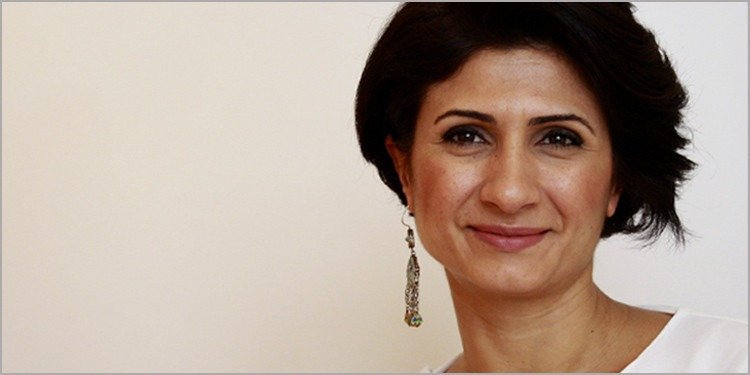
Gülsüme Oğuz
Clinical Psychology.
Leave a Reply