
Placelessness in the Context of Yazidis
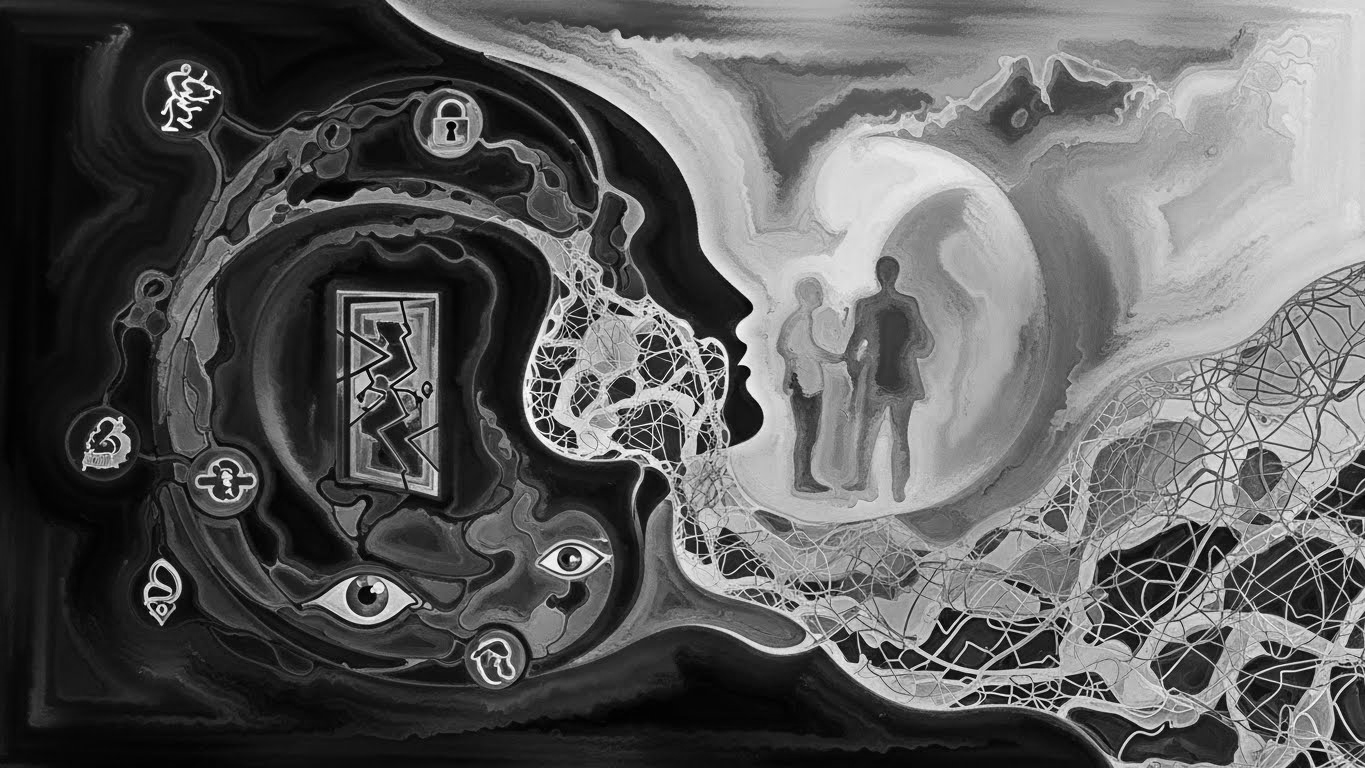
In this study, I will examine the traumatic effects of displacement and homelessness at both individual and social levels, specifically focusing on the Yazidis, based on my own observational experiences. To achieve this, I will first attempt to explain the meanings of the relationship humans establish with ‘place’ through a psychoanalytic lens, utilizing psychology, neurology, sociology, anthropology, and history, as well as philosophical, religious, and mythological texts and legends. Furthermore, I will convey the jarring and even destructive effects of forced displacement on human ego integrity and social structures, supported by examples from the literatures of the aforementioned disciplines. Subsequently, I will discuss the work I conducted as a psychologist between August 2014 and August 2015 with Yazidis who were forcibly displaced and took temporary refuge in various provinces of Turkey. Drawing upon Yazidi faith, history, culture, and mythology, I aim to describe the disruptive effects of the experience of homelessness through my own observations and experiences.
Keywords: Yazidis, human-place relationship, forced displacement, individual and collective trauma, ego integrity, temporary refuge
INTRODUCTION
Place as an Existential Need
Settling in a geographical location is an existential need that enables the preservation of ego integrity, the anchoring of familial roots, and the creation of a shared history and culture through the establishment of continuous social relations. The place itself, being a significant mental representation of external reality, and the experience of having a space to settle, support the development of the internal reality.
The development of boundaries between an individual’s internal and external reality allows for the cultivation of both an integrated identity within oneself and a shared culture within social relations. Structures and systems that provide for needs within the boundaries of physical space not only function to protect the ego integrity of individuals but also enable communities to develop a vision for the future aimed at remaining together and ensuring the continuity of their lineage.
Place as the Space Where Internal Reality Connects with External Reality
Psychoanalytic literature presents the psyche by conceptualizing it as a “space” with depth. It defines the unconscious as the vastest part of this space with indeterminate bottom boundaries, while defining consciousness as a surface broad enough only for its manifestations to be perceived. What belongs to the psyche is characterized as internal reality or the internal world, whereas what belongs to external reality is termed external reality or the external world. The strength of the relationship established through belonging to the place where one lives, and that place’s belonging to the individual, determines the direction and intensity of the mentally constructed relationship with external reality.
The Development of Inside and Outside in Psychoanalytic Theories
According to Psychoanalytic Theory, the human infant is initially a mass of fragments undifferentiated from the external world. According to Freud, in this fragmented state following birth, a relationship is established with the external world through an “oceanic feeling” (1930). In other words, the universe is a whole with the infant. In the following months, the infant realizes they are something separate, first from the mother and then from the external world. As that which belongs to the psyche becomes distinct, that which belongs to the external world also emerges or remains present. In fact, while explaining the oceanic feeling, Freud suggests that the organism extrudes the external world from the internal world.
The mother, the infant’s first object, is a fragmented object like the “breast” before integration, and the development of the breast representation is expected in the first months. What allows the child to progress is the distancing from the mother. In the mother’s absence, a mother representation—processed through her voice, scent, and the sensations she creates—develops. Thus, in the following months, fragmented images merge to transform into an integrated self and parental representations. Integrated imagery and representations provide the infant with the power to maintain their integrity.
To explain the strength of the interest and differentiation between the external and internal worlds, Freud proposed the concept of the somatic ego and stated that the mental ego is, above all, a bodily ego (1923). The body image provides strength, security, and support to the being. The mutual relationship between psychic boundaries and the skin covering the body has become more visible with the work of Didier Anzieu. Today, the relationship between the development of the capacity for imagery regarding the self and external objects and the development of body imagery has become indisputably clear. Indeed, Freud’s view that no vital experience is possible without a body image is widely accepted (Eiguer, 2013).
The reason imagery deserves such a vital position is that it is the precursor to our relationship with the external world. The remembering of an image belonging to an external phenomenon or person is called representation. Eiguer defines representation as a thought stimulated by a drive seeking satisfaction in the external world (2013). The stimulus resonates in the unconscious and leaves a trace. Subsequently, the unconscious reprocesses the imagery of the external phenomenon or subject by adding features from itself. Thus, through a mutual transformation, a relationship is established between what is inside and what is outside the psyche.
The Womb as the First Home of the Spirit and Displacement
Humanity’s first home is the mother’s womb, perfectly encompassing, protecting, and nurturing. Until the time of birth, a state of perfect balance and peace prevails, as depicted in paradise. Under normal circumstances, at the end of the nine-month period, the human infant is expelled from its paradise of union with the mother’s body. However, throughout life, the longing for that first home manifests in various ways. (Birth Trauma, Otto Rank)
Ilany Kogan, in her work with a Jewish analysand who survived the Nazi Holocaust, discusses how the longing for reunion with the mother transforms into a yearning (2012).
The First Place After Birth and Being Displaced From That Place
The first scene of fantasy, considered the source of life, takes place in the parents’ bed. According to Freud’s theory of the first scene fantasy, the infant fantasizes about its parents engaging in sexual intercourse (1923). The location of this sexual intercourse, the parents’ bed, is the bedroom; it’s in the house. While there are cross-cultural differences, during the breastfeeding period up to the age of two, the infant may frequently visit the parents’ bedroom. However, once weaned, the infant will be expelled from the parents’ bedroom and displaced. Perhaps this is why, with the Oedipal period, the child will seek ways to re-enter the parents’ bed. If a boy can eliminate the father, or a girl the mother, they can regain their original place in the world. But by the time they realize they are no longer as powerful invaders as their mother or father, several years will have passed. And from this point on, they will have to invest in other areas where they can find fulfillment.
The home is the place where the spiritual is born. In modern cities, births take place in hospitals, but in traditional cultures, births largely occur at home, in the bedroom. Immediately after birth, the baby is placed in the mother’s arms in her bed. As Eiguer (2014) points out, the baby spends a significant portion of its early years sleeping in the parents’ bed, trying to act out or play with fantasies about its childlike sexuality.
According to Bechelard, who discusses the relationship between the home and the unconscious, the house we are born into is not so much a roof that shelters us, but a roof that shelters dreams. The home accommodates dreaming, protects the dreamer, and allows us to dream in peace (2008). Eiguer shares a similar view; dreams are formed about the home; indeed, the home is the condition of the dream and the dream activity of the family (2013). The dream is within the home, that is, within the spiritual realm. However, the nightmare is what overflows from the spiritual realm, and only a home can best contain it again. The home seen in a dream is the home into which one is born. It is the home in which the spiritual is nurtured.
Bachelard criticizes psychoanalysts for viewing the image solely as a product of imagination. According to him, once an image is formed, it is an entity in its own right. He defines the home as a corner of the world belonging to the self, even a cosmos in itself. The unconscious resides in the home. Its cellar harbors terrifying fantasies; its attic contains repressed dreams of childlike sexuality. The home is a place that nourishes with its kitchen, cleanses with its bathroom, rids of disturbing internal waste with its toilet, provides sleep, warmth, comfort, space for thought, and the opportunity to dream.
Bachelard argues that speaking of the house we were born in is synonymous with speaking of our origins, our arrival in the world, and our ancestors (1996). Moreover, in Kurdish, the mother tongue of the Yazidis, the word “house” (mal:home) is used synonymously with both the structure in which one lives and the concept of family. A family is usually named after its eldest male ancestor (rarely a female ancestor). In this naming convention, the concept of “house” (mal) is used instead of “family” (malbat). For example, a family whose grandfather was Haco is called Mala Haco (Haco House = Haco Family).
Kurds and Yazidis who are citizens of Iraq, Syria, and Iran can use their traditional surnames on official identity cards. However, in Turkey, Kurdish families are legally required to use Turkish words or names related to Turkishness when being given official surnames, so they generally cannot use local family names as surnames on official identity cards (Turkish Civil Code, Article 2525, Paragraph 10). For example, although my family has no connection whatsoever to the Oghuz Turks, it has been officially given the surname Oghuz.
The Home as Self and Representation
According to Joannidis, a psychoanalyst who has studied the phenomenon of migration, the image of home is a direct representation of the self (2013). Joannidis emphasizes that just as physically moving away from home necessitates establishing a new home, it similarly causes significant changes in the self, and this change is a painful process, much like the journey of migration. Eugiene, another author who discusses voluntary relocation and establishes a direct link between home and the somatic self, states that although we cannot renew our fur or change our skin like other living beings, we can change our homes.
Projective tests, used for measurement and evaluation, are based on the assumption that the client projects their inner world onto the test material. In one such test, the House-Tree-Person test, the client is asked to draw a house, a tree, a person, a family, and a freehand drawing. They are then asked to construct a story related to the house, tree, and people in their drawings. During the interpretation phase, the test administrator evaluates and reports on the client’s personality based on their drawings and verbalizations.
The Body of the House
The house is a product of human creativity. We know that in the most primitive times, people sought refuge in tree hollows and caves to protect themselves from natural conditions. Later, they carved rocks with their own minds and hands, creating the first unnatural shelters. Today, whether settled or nomadic, our shelters are entirely the product of human intellect.
In developed countries, the latest technology is used in house construction. Many laborious tasks, from digging the foundation to painting the walls, are done directly by machinery without human intervention. However, in traditional cultures, the handiwork of the people who will live there is involved in every part of the construction, from the building stones of the walls to the doors and windows. In cultures where livelihood is tied to the land, families usually build their own homes. They prepare the ground for the house, carve the stones to be used in building the walls, knead the clay, cut the planks, and mix the mortar and paints by hand.
It would be appropriate to touch upon our relationship with the meanings of the sections and parts of our home, where spirituality is born and flourishes.
With the roof, we protect ourselves from the scorching sun and the drizzling rain. The roof, which separates us from the infinite space, draws a certain boundary between the earth and the void. Within this boundary, it allows for creative thinking and conceptualization.
The attic holds old objects that bear witness to the past. These objects may never be used again. They are not put in the attic to be repurposed; rather, they are there because they have lost their daily functionality. However, they continue to be kept there because they are still functional from a spiritual perspective. Rarely, the dust is wiped off the objects to feel the magic of the past. But like Aladdin’s Magic Lamp, the magic of the attic is limited. Just as the genie who grants only three wishes disappears, one doesn’t spend too much time in the attic.
Walls are one of the most important parts of a house, both in relation to the outside world and to other parts of the house itself. The exterior walls are the most important element in defining the boundary between inside and outside. They act like a protective skin against the effects of natural conditions. At the same time, they clearly separate the inhabitants from potential guests and strangers from the outside. They provide the conditions for the privacy needed by the household.
The interior walls, on the other hand, create rooms and partitions, establishing new spaces for different needs. The necessary privacy for different household units such as bedrooms, bathrooms, kitchens, and living rooms is established thanks to the interior walls. Virginia Woolf argued that a woman needed a room of her own to write. She pointed to a room where she could find privacy, meet her basic needs, and be alone.
Windows and doors are the most important means of connecting with the outside world. They allow for the controlled entry of necessary light, air, and other things while also enabling access to the outside. Windows and doors, which close when leaving the house, protect it from other people. Curtains protect the interior from prying eyes.
We spend a significant amount of time in our homes during our early years. The layout and furnishings of a home are generally determined by the roles of the family members. The parents’ bedroom is usually located at the back of the house and has an en-suite bathroom, indicating their greater need for privacy and the presence of a sexual life. The living room is located at the entrance of the house, large enough to accommodate the whole family at once, and is the most easily accessible area. As children reach adolescence, their need for privacy increases, and doors begin to close or even lock. Teenagers may slam doors, seemingly testing the resilience and stability of the adults in the house. For children, the durability of the house’s walls is an important (transitional object?) tool in their relationship with their parents. Whether the walls, along with the doors and windows, adequately retain sound and heat, provide sufficient protection from rain, humidity, and wind, and how secure the house is against potential intruders, is a representation of how supportive, embracing, and protective their parents are.
According to Eiguer, a home should be strong enough—hard and insulating—to provide security and comfort, while also being open and flexible enough to facilitate our interaction with the outside world (2013). The author’s views are like an answer to the question of what constitutes a sufficiently mature ego. Supporting her views with the concept of an inner habitat, the author argues that this inner habitat, a synthesis of one’s own body image and family group representation, is a spiritual representation that organizes our settlement within a habitable space. Family privacy is established through unconscious materials left in the living space. It creates the conditions for feeling comfortable and supported by loved ones.
The Relationship Between Language, Body, Identity, and Geographic Definition
Just as we attribute human characteristics to objects in the external world when relating to them, we also use external objects to describe personality traits. While keeping cultural differences in mind, the expression “a man like a mountain (merek weki çiya)” in the Kurmanci dialect of Kurdish spoken by the Yazidis refers to a strong and unwavering personality, as well as healthy physical attributes. We use human organs when describing geographical or socio-economic areas. For example, it’s difficult to describe the Bosphorus, the European side, the heart of the city, the lifeline of commerce, or the lungs of the Marmara Sea without using these expressions. The sensation of low temperature in nature, “cold (sar),” again points to character traits that can be summarized as low empathy. We describe the leader of a group as “baş (seri),” while we use body parts like “right hand (mile raste).”
We use “trees and branches” to describe family lineage. We conceptualize a family member’s relationship with their ancestors and culture through the concept of “roots.” The image of a tree rooted in the soil directly points to the vital connection humans have with the land. It would not be an exaggeration to highlight this direct relationship, especially for traditional cultures that rely on cultivating the land for their livelihood. For families living in homes with gardens filled with trees, orchards, and ornamental plants, the vividness of this imagery is undeniable, as can be seen in the examples I will provide from my studies.
Kutsal Metinlerde İlk Yer ve Yerinden Edilme
According to Judaism, Christianity, Islam (whose holy books still exist), and Yazidism (whose holy book is lost), the first home of Adam and Eve, the first humans, was paradise. According to all these religions, Adam and Eve were expelled from paradise by God for eating the forbidden fruit of wisdom. Therefore, expulsion began with the religious myth of human existence. And the longing for the first home will continue throughout human history. According to these religions, apart from Adam and Eve, those who obeyed God’s commands will be readmitted to Paradise after death. And after that, they will never again be expelled from their place in paradise, where they will find eternal peace and fulfillment.
The murder of Abel by Cain, the son of Adam and Eve, also caused the first exile. God branded Cain on the forehead, commanding him to go to distant lands far from his people. He was separated from his small community, consisting of his mother, father, and older brother Seth, condemned to loneliness and immortality. Cain, by committing the first murder, lost his chance to return to Heaven because he had committed the greatest of the seven deadly sins that God cannot forgive.
(Mythology to be added – protective gods and temples on the mountain)
Nomadism, Settlement, Invasion, and Displacement in Human History
Human history begins with a nomadic lifestyle based on hunting and gathering as a means of subsistence. During this period, the first shelters were natural caves, hollows, and cavities. With the cultivation of edible plants, agricultural culture developed, and a settled, land-based way of life emerged. From this point, we can talk about the acquisition of a physical space, establishing one’s authority within it, and developing a sense of belonging to that place and its inhabitants. As the cultivation of land and crops became more controlled, shelters were carved out of rocks. Then, building blocks like adobe, made from a mixture of clay, mud, and straw, were produced, inventing houses, a product of human ingenuity. The construction and use of stone and adobe houses as living spaces, with a history exceeding 12,000 years, continues today in regions where agriculture and animal husbandry are the main sources of livelihood.
As communities expanded, their living areas diversified and increased in number. Due to changes in their settlements that caused famine, some communities were forced to migrate. Some barbarian tribes, using their warlike and aggressive power, invaded settled civilizations and forcibly seized their wealth. During those periods, members of settled civilizations were enslaved, killed, or forced to leave their homes to survive.
One of the most striking examples of displacement in human history is the Great Migration of Peoples. Beginning in Central Asia, the Hun migration caused tribes to push and shove each other, spreading across Anatolia to the European continent. This migration led to the collapse of large and established kingdoms, replaced by smaller, land-based feudal administrations. This transformation was so profound that the Great Migration of Peoples is considered a turning point that closed the Ancient Age and ushered in the Middle Ages.
The greatest massacres and displacements in our recent history occurred during World War I and World War II. These wars resulted in massive waves of migration, redrawing the boundaries of national power and altering forms of government. Following the inhumane genocidal acts of violence perpetrated by the National Socialist Nazis against the Jews and by imperialist America against the Buddhist Japanese during World War II, the Convention on the Prevention and Punishment of the Crime of Genocide was signed in 1948. This convention aimed to ensure that inhumane crimes such as massacres, rape, and forced detention would not be repeated.
We hoped that crimes against humanity, such as mass rape and genocide, which are a great shame for humanity, would never be repeated. However, our hopes were not fulfilled, and in the post-Cold War era, millions of people in Africa, Asia, and Europe lost their lives in wars, were abducted, and subjected to rape. Those who managed to survive these massacres were forced to leave their homes and embark on long journeys of migration. The causes of these crimes against humanity, which occurred after the 1980s and continue to this day, are too widespread to be explained by a specific geography, nationality, religion, or ideology.
Afrika Kıtası’ndaki 7 ülkede gerçekleşen soykırım ve yerinden edilme olgularına baktığımızda pek çok çarpıcı ortak nokta görürüz. Afrika toprakları II. Dünya Savaşı’na kadar çeşitli Avrupa ülkelerinin sömürgeleriydi. Bu ülkeler savaş sonrası dönemde bağımsızlıklarına kavuşma sürecine girmişlerdir. Ancak bu devletler sınırlarıyla beraber yönetim, adalet ve denetim mekanizmalarını belirlerken bir yandan da sömürge dönemlerinden kalma ayrıştırıcı politikaların mirasıyla baş etmek zorunda kalmışlardır.
Sömürgeci ülkelerin geri çekilmesinden sonra ayrıştırıcı politikaların en sert sonucunu yaşayan Afrika ülkesi Ruanda’dır, Ruanda‘nın büyük iki kabilesi olan Hutular ve Tutsiler aralarında dil ve din birliği olmasına rağmen, Belçika’nın sömürgesi olduğu dönemde bir kabilenin diğerine göre daha uzun boylu ve açık tenli olması sebebine dayanarak ayrıştırılmışlardır. Tutsilere yönetim, eğitim ve hizmet alanlarında ayrıcalıklar tanırken Hutuları bundan mahrum bırakmıştır. Bu ayrımcılığa maruz kalmış Hutuların Tutsilere duyduğu öfke sömürge sonrası dönemde tarihin en büyük katliam, zorla yerinden etme, zorla alıkonulma ve toplu tecavüzleriyle kendini göstermiştir. II Dünya Savaşı’ında katledilen Musevi kadar Tutsi hayatını kaybetmiş olmasına karşın Dünya kamuoyu vicdanında aynı yankıyı bulamamıştır.
Similar examples to Rwanda have occurred in Uganda, the Democratic Republic of Congo, Chad, Darfur, Sierra Leone, and Liberia. These African countries, formerly colonies of the United States, France, and Great Britain, have witnessed civil wars resulting in forced displacement and other crimes against humanity, despite the absence of significant religious or ethnic differences. It took considerable time for the world public to react to the crimes against humanity committed in these seven African countries; the United Nations’ intervention was delayed. The established truth and reconciliation commissions and courts have issued contradictory rulings on what constitutes a war crime and what constitutes an internal matter of the countries (Çakmak, Çolak, Güneysu, 2014). This 20-year period, which resulted in the massacre of millions, the abduction of women and children, mass rapes, and forced displacement, has still not received the recognition it deserves in the conscience of the world public.
In Europe, Bulgaria’s assimilation policies resulted in the forced displacement of thousands of Muslim Turks. No truth and justice commission has been established to investigate the consequences of Bulgaria’s harsh assimilation policies, nor have these policies received the attention they deserve in the international community, except in Türkiye.
In the Yugoslav region, the ethnic cleansing initiated by Serbs against Bosniaks resulted in the deaths and displacement of thousands of people. As in the examples given above, war crimes against humanity were committed. Again, UN and other international military intervention and humanitarian aid were delayed, and only a limited number of people were punished. The only difference between what happened in Yugoslavia and other countries is that an extremely serious crime against humanity, such as mass rape, is recognized as “ethnic genocide” in international law.
Examples from Afghanistan, Pakistan, and India in Asia will be added.
One of the latest massacres that defies the limits of human reason and results in displacement continues to unfold in the Middle East. The Islamic State of Iraq and Syria (ISIS), an organization that declares its aim to establish an Islamic State in Iraq and Syria, has been continuing to massacre Muslims, Yazidis, Christians, and other religious minorities using inhumane methods since 2014.
Leave a Reply